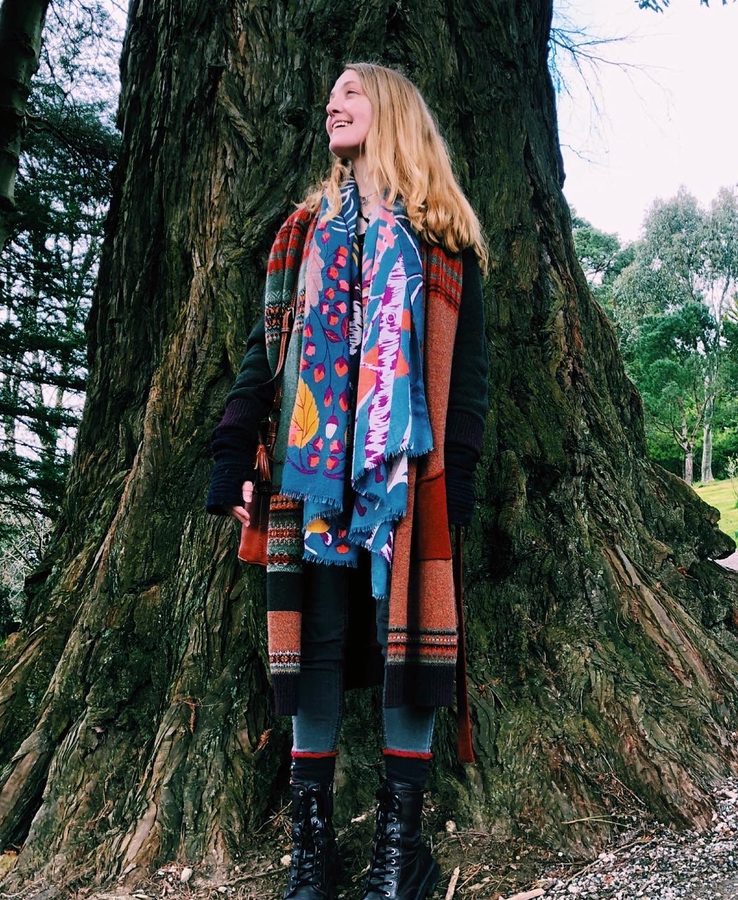
Elizabeth Oxley

Writer Dublin, Ireland Poems & radio

Elizabeth Oxley

Elizabeth's work has appeared in journals such as Heroines, The Waxed Lemon, The Poetry Review, Frontier, and The Montreal Poetry Prize Anthology. She's currently at work on her second novel while pursuing a PhD in Literary Practice at Trinity College Dublin.

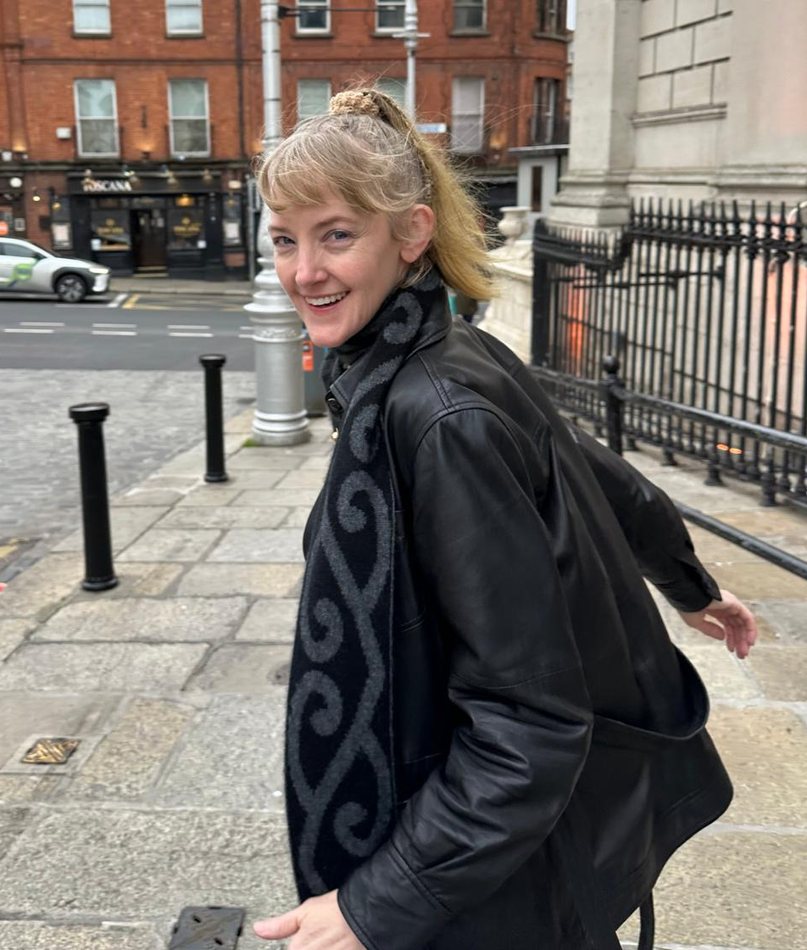
Elizabeth Oxley in Dublin

01 — Poems

Selected poems

Selected Poems

Selected Poems

Country Dinners

Finalist, Montreal Poetry Prize, 2022

It was nothing for her to turn out
two pies after church. Engraved,
her napkin holder implored Bless

O Lord. First came gravy and meat,
dandelion leaves dressed. In the lull
before dessert, my brothers and I

pushed back from the table—parting
Victorian shadows, exploring
attic nooks. We sifted through

photos, ran our fingers across
her typewriter’s cold metal,
watched each key throw its punch.

Her house struck us like a temple
to a distant age: cut glass jars
and standing clocks. When she called us

1

Country Dinners continued

to the kitchen, we spooned up crusts
beneath a picture of The Last Supper.
Everything she did, she did in the name

of that man’s heart red as a wild July
strawberry. Finished, we slipped upstairs
again—children on the quest

for lost things, trespassing through dust
suspended in custard sunlight,
finding a soldier’s uniform hung

inside a closet as if, sleeved in wool,
our grandfather might any minute
climb back down from heaven.

2

Selected Poems

Old Medicine

Finalist, Montreal Poetry Prize, 2022

Once every week, Larry drives to the nursing home
from his downtown beauty salon to paint

my grandmother’s fingernails red. Her eyes
are cloudy. He shakes the bottle. I see him

when I drop by to kiss her quiet cheek. The television
blares snowstorm news as Larry draws his brush

across her yellow ridges, by a window overlooking
fields shorn to the corn-quick, spare woods

where hawthorn each year sprouts its blood-berry,
white petals a flotilla of land-stars, floral storehouse

for cosmic remedy. Before plastic bottles of pills,
there was willow bark for fever, the sage hand

scavenging medicinal roots and leaves. And what
of the hand itself? Its love was present in the poultice.

3

Old Medicine continued

Larry separates my grandmother’s fingers—
thinning feathers through which pale sky passes.

Her smile blooms blank against the backdrop of a hissing
oxygen machine. I watch from the door, the nurse

murmuring any day now. Larry gives my grandmother
an extra coat, and she lives three weeks more.

4

Selected Poems

Biracial

Third Place, National Poetry Competition, 2015

for my daughter

Some people stare,
searching for a Judas bone,
but all they can find
are the stems of your arms,
the sleek plunge of femur
into socket.

These are the usual things,
and why shouldn’t they be?
You were not a provision
of armistice or treaty.
You were not born to be
nation or diaspora.

The love that made you
was simple as the sounds
at breakfast: clink of pan
on stove, scraping-back of chair.

5

Biracial continued

No slave ever rocked
inside the boat of your hips,
no explorer pried open
an African river.

They say the ancestors
reside in a sacred grove.
Your homeland is wherever
you stand. If the gaze lingers,
it’s on your spine, straighter
than the fence lines
at Gettysburg.

6

Selected Poems

The Ant Queen’s Children

The Banyan Review, Issue 2, Summer 2020

I meant no harm when I burned them
with a magnifying glass, wishing only to know
if it were true: you could channel sunlight.

Prometheus gave humans fire, and for this,
goes the story, he was tormented by an eagle.
The ants shriveled. My father was a doctor.

After he divorced my mother, I sat in the dirt
of his yard, squishing ants between glass slides,
slipping them beneath his microscope.

Families are strange creatures: whole one day,
broken the next. At my father’s desk,
I examined ant armor, pointy swords of their hairs,

too young to consider I caused them pain.
What have you learned? the elders might ask
in the afterlife. I picture everyone there:

7

The Ant Queen’s Children continued

elephant gods, the dog king. We are sitting
in a circle, on folding camp chairs like those
on summer sale at McGuckin’s Hardware.

When the ant queen turns her gaze on me,
I’ll apologize and explain how I’ve grown.
Through my father’s strong lens, I saw features

invisible to my naked eye. What, I later wondered,
could I not hear with my naked ears,
not feel with naked hands? I am certain now

everything is conscious. If you understand me,
I bet you’re the type who kisses your cat
good night. When your daughter calls you

to her room because a bee is trapped inside,
beating its head against her pane, I bet you
cover the bee with a Tupperware bowl and carry her

to the garden you keep meaning to weed, where habaneros
grow despite you. You shake the bee free
on a bed of mint, because you hear and do not hear her

8

The Ant Queen’s Children continued

say she is hungry, she is tired. She is buzzing
like something gone haywire. You understand—
you resemble her in this. You could be sisters.

9

Selected Poems

Expelling Venus

Second Place, Frontier Poetry OPEN Competition, 2018

When the doctor says he’ll need to remove
my ovaries, I consider performing a farewell ritual—
hippy shindig with altar, candle, and two stones
plucked from the river. Instead, I sign in for surgery
and awake to a stomach pocked with cuts,
skillful breaking and entering, ovaries gone
like two thieves stealing away in the night.
Nurses roll me into a recovery room. In morphine half-dreams
I recall the nude pantyhose my grandmother used
for Christmas stockings. They lined her hearth,
an eerie cabaret of thrombotic legs into which
my brothers and I thrust our hands each year,
tearing out what didn’t belong: gift boxes,
shiny lengths of ribbon, twenty-dollar bill pinned
to each toe like a callus. That night, I sleep
fitfully on spartan sheets, and in the morning,
a young orderly helps me from my cot to a wheelchair,
smiling—beautiful little boy—all the way to the lobby.
I can have no more children. I clutch my stomach
and grieve, remembering the doctor’s sketches—

10

Expelling Venus continued

how my tubes resembled horns, my uterus a skull
my brother once kicked over in a field. It was flocked
with lichen, lower jaw missing, as if the earth
had begun dismantling it bottom up, leaving the antelope
mouthing the ground like a bit, so accustomed
she’d once been to carrying life inside her.

11

Selected Poems

After April Rain

First Place, Frontier Poetry Industry Prize, 2019

When the dogwood in our yard drips
dry, pink blooms erupt like wounds. Knowing me,
my brother once said, be sure to live outside
of sadness. I craved storms the way some were
addicted to drugs or horses, I adored
the word flank for its military muscle.
On my left sits gloom, on my right
the memory of a Buddhist monk.
He was passing through town. I made
an appointment. About my daughter,
he said, she will do what you do. After that,
I sought silver linings without edges
sharpened, drank chamomile tea,
kept a journal until I turned coward.
Finding my daughter in the bathroom,
I calculate our odds and press a cloth
to her arm. She drops the blade in a corner
crammed with dirty laundry. I couldn’t speak
until now. No longer captive to her grief,
my daughter points to full moons and horses

12

After April Rain continued

clustered in a mountain field, hooves
carving columbine. She climbs the fence,
feet covering ground, planted on rock.
I think girl and hear thunder.

13

Drag a corner, or use the arrows

It was nothing for her to turn out two pies after church. Engraved, her napkin holder implored Bless

O Lord. First came gravy and meat, dandelion leaves dressed. In the lull before dessert, my brothers and I

pushed back from the table—parting Victorian shadows, exploring attic nooks. We sifted through

photos, ran our fingers across her typewriter’s cold metal, watched each key throw its punch.

Her house struck us like a temple to a distant age: cut glass jars and standing clocks. When she called us

to the kitchen, we spooned up crusts beneath a picture of The Last Supper. Everything she did, she did in the name

of that man’s heart red as a wild July strawberry. Finished, we slipped upstairs again—children on the quest

for lost things, trespassing through dust suspended in custard sunlight, finding a soldier’s uniform hung

inside a closet as if, sleeved in wool, our grandfather might any minute climb back down from heaven.

Open on its own page →

Once every week, Larry drives to the nursing home from his downtown beauty salon to paint

my grandmother’s fingernails red. Her eyes are cloudy. He shakes the bottle. I see him

when I drop by to kiss her quiet cheek. The television blares snowstorm news as Larry draws his brush

across her yellow ridges, by a window overlooking fields shorn to the corn-quick, spare woods

where hawthorn each year sprouts its blood-berry, white petals a flotilla of land-stars, floral storehouse

for cosmic remedy. Before plastic bottles of pills, there was willow bark for fever, the sage hand

scavenging medicinal roots and leaves. And what of the hand itself? Its love was present in the poultice.

Larry separates my grandmother’s fingers— thinning feathers through which pale sky passes.

Her smile blooms blank against the backdrop of a hissing oxygen machine. I watch from the door, the nurse

murmuring any day now. Larry gives my grandmother an extra coat, and she lives three weeks more.

Open on its own page →

for my daughter

Some people stare, searching for a Judas bone, but all they can find are the stems of your arms, the sleek plunge of femur into socket.

These are the usual things, and why shouldn’t they be? You were not a provision of armistice or treaty. You were not born to be nation or diaspora.

The love that made you was simple as the sounds at breakfast: clink of pan on stove, scraping-back of chair. No slave ever rocked inside the boat of your hips, no explorer pried open an African river.

They say the ancestors reside in a sacred grove. Your homeland is wherever you stand. If the gaze lingers, it’s on your spine, straighter than the fence lines at Gettysburg.

Open on its own page →

I meant no harm when I burned them with a magnifying glass, wishing only to know if it were true: you could channel sunlight.

Prometheus gave humans fire, and for this, goes the story, he was tormented by an eagle. The ants shriveled. My father was a doctor.

After he divorced my mother, I sat in the dirt of his yard, squishing ants between glass slides, slipping them beneath his microscope.

Families are strange creatures: whole one day, broken the next. At my father’s desk, I examined ant armor, pointy swords of their hairs,

too young to consider I caused them pain. What have you learned? the elders might ask in the afterlife. I picture everyone there:

elephant gods, the dog king. We are sitting in a circle, on folding camp chairs like those on summer sale at McGuckin’s Hardware.

When the ant queen turns her gaze on me, I’ll apologize and explain how I’ve grown. Through my father’s strong lens, I saw features

invisible to my naked eye. What, I later wondered, could I not hear with my naked ears, not feel with naked hands? I am certain now

everything is conscious. If you understand me, I bet you’re the type who kisses your cat good night. When your daughter calls you

to her room because a bee is trapped inside, beating its head against her pane, I bet you cover the bee with a Tupperware bowl and carry her

to the garden you keep meaning to weed, where habaneros grow despite you. You shake the bee free on a bed of mint, because you hear and do not hear her

say she is hungry, she is tired. She is buzzing like something gone haywire. You understand— you resemble her in this. You could be sisters.

Open on its own page →
When the doctor says he’ll need to remove my ovaries, I consider performing a farewell ritual— hippy shindig with altar, candle, and two stones plucked from the river. Instead, I sign in for surgery and awake to a stomach pocked with cuts, skillful breaking and entering, ovaries gone like two thieves stealing away in the night. Nurses roll me into a recovery room. In morphine half-dreams I recall the nude pantyhose my grandmother used for Christmas stockings. They lined her hearth, an eerie cabaret of thrombotic legs into which my brothers and I thrust our hands each year, tearing out what didn’t belong: gift boxes, shiny lengths of ribbon, twenty-dollar bill pinned to each toe like a callus. That night, I sleep fitfully on spartan sheets, and in the morning, a young orderly helps me from my cot to a wheelchair, smiling—beautiful little boy—all the way to the lobby. I can have no more children. I clutch my stomach and grieve, remembering the doctor’s sketches— how my tubes resembled horns, my uterus a skull my brother once kicked over in a field. It was flocked with lichen, lower jaw missing, as if the earth had begun dismantling it bottom up, leaving the antelope mouthing the ground like a bit, so accustomed she’d once been to carrying life inside her.

Open on its own page →

When the dogwood in our yard drips dry, pink blooms erupt like wounds. Knowing me, my brother once said, be sure to live outside of sadness. I craved storms the way some were addicted to drugs or horses, I adored the word flank for its military muscle. On my left sits gloom, on my right the memory of a Buddhist monk. He was passing through town. I made an appointment. About my daughter, he said, she will do what you do. After that, I sought silver linings without edges sharpened, drank chamomile tea, kept a journal until I turned coward. Finding my daughter in the bathroom, I calculate our odds and press a cloth to her arm. She drops the blade in a corner crammed with dirty laundry. I couldn’t speak until now. No longer captive to her grief, my daughter points to full moons and horses clustered in a mountain field, hooves carving columbine. She climbs the fence, feet covering ground, planted on rock. I think girl and hear thunder.

Open on its own page →

The Grotto Bus Stop

Waiting for the bus by a statue of Mother Mary I watch a bee zip flower to flower

someone’s left a stone in the shape of a heart at Mary’s feet

which makes me think of you and the night we walked by the river

you stood angled close to me so our bodies mapped an opening door

the bus noses through traffic the bee airlifts his stash of sugar

oh fly back to this city that loves you

we can make another door and I will go where you go

02 — About

About

Elizabeth Oxley

Elizabeth holds a master's in Creative Writing from Trinity College Dublin, where she is also pursuing her PhD in Literary Practice. She was a 2022 Ireland Chair of Poetry Student Award winner.

Her work has been recognised by the Frontier Poetry Industry Prize and the National Poetry Competition and has previously been shortlisted for the Bridport Prize and the Montreal International Poetry Prize. Several of her pieces have been broadcast on RTÉ Radio 1.

03 — Broadcast

On the radio

Sunday Miscellany, RTÉ Radio 1

04 — Post

Say hello

or: elizabeth at elizabethoxley dot com